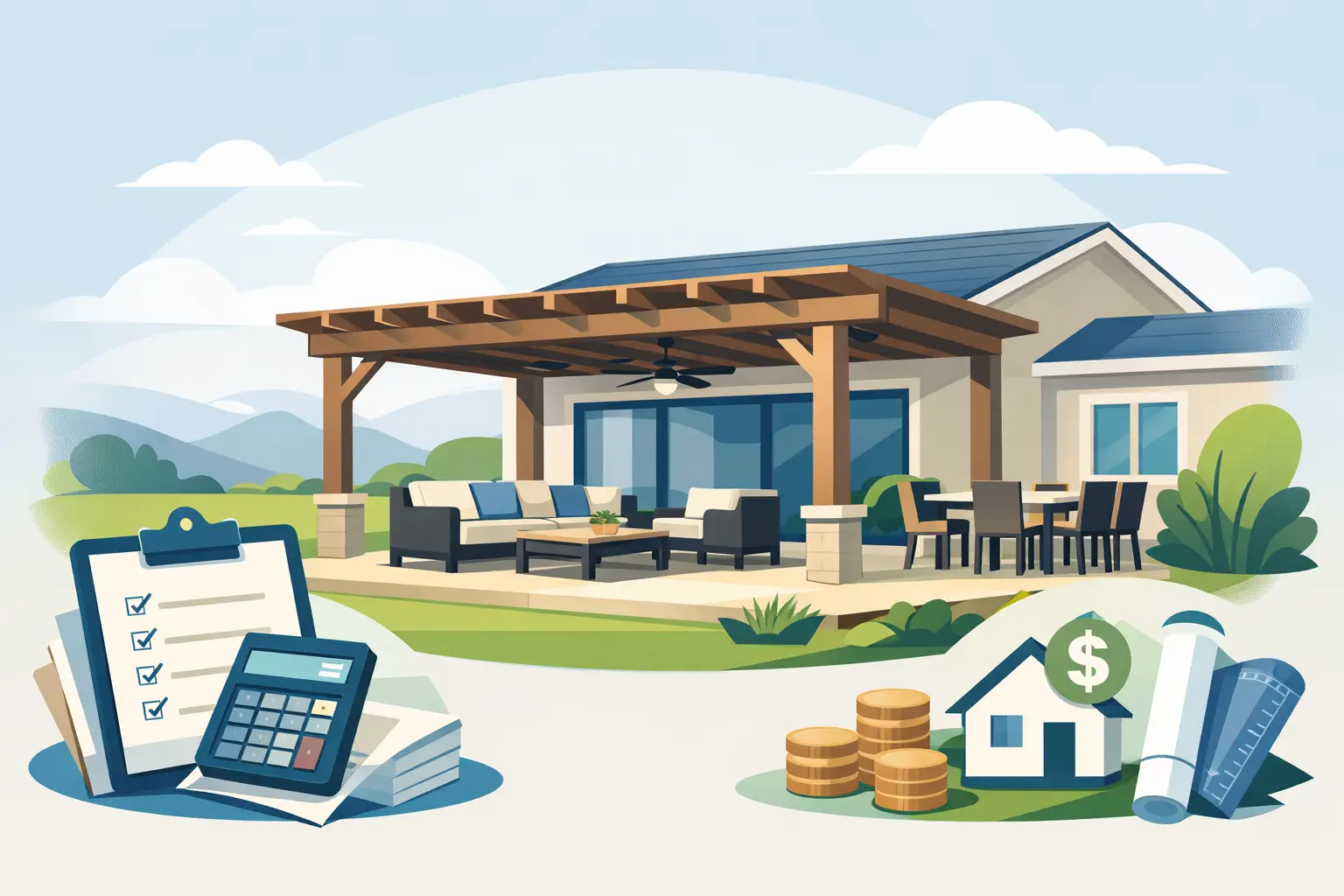
A covered patio can completely change how you use your backyard. It turns a space that sits empty during hot afternoons or rainy evenings into a comfortable extension of your home. For most homeowners, the first question is simple: what is the covered patio addition cost, and what makes one project land at a reasonable price while another climbs fast?
The honest answer is that cost depends on the size of the patio, the type of cover, the materials you choose, site conditions, and whether the structure is a simple shade cover or a fully finished outdoor living area. If you are planning carefully, it helps to understand where your money actually goes before you request estimates.
Covered patio addition cost ranges
For a basic project, many homeowners can expect a covered patio addition cost to start around a few thousand dollars for a smaller, straightforward cover attached to an existing patio slab. A mid-range project with better materials, larger dimensions, and integrated finishing details often lands in the roughly $10,000 to $25,000 range. A high-end covered patio with custom framing, upgraded roofing, ceiling finishes, lighting, fans, and premium outdoor materials can move well beyond that.
That wide range is not a sales tactic. It reflects how different these projects can be. A simple aluminum cover over a small concrete pad is a very different job from a custom-built roof extension designed to match your home exactly.
For Maryland homeowners especially, pricing can also shift based on local code requirements, permit needs, and the amount of structural work required to handle snow loads, drainage, and tie-ins to the existing house.
What affects covered patio addition cost most?
Size is the most obvious pricing factor. A 10-by-12 covered patio costs less than a 16-by-24 structure because it uses fewer materials and less labor. But size is only the starting point.
The type of patio cover matters just as much. An insulated roof panel system, a wood-framed roof, and a vinyl or aluminum cover all come with different price points and long-term maintenance needs. Some materials lower upfront cost but may not deliver the same finished look or durability. Others cost more initially but create a more polished, permanent addition that blends with the home.
Foundation and surface conditions can also change the budget. If you already have a strong, properly sized patio slab, that can reduce the scope of work. If the existing surface is cracked, undersized, unlevel, or not built to support the new structure, repairs or replacement may be necessary.
Roof tie-in complexity is another major factor. Attaching a patio cover to the house may require structural reinforcement, flashing, roofing adjustments, and careful water management. A freestanding structure can avoid some tie-in issues, but it may require additional posts and footing work.
Then there are the upgrades homeowners often decide to include once the project takes shape. Ceiling fans, recessed lighting, outdoor electrical outlets, finished columns, tongue-and-groove ceilings, gutters, and matching trim all improve function and appearance, but each adds cost.
Material choices and their trade-offs
When homeowners compare quotes, material selection is often where the biggest differences show up.
Wood-framed covered patios are popular because they offer a custom, high-end appearance. They can be designed to match the architecture of the home and support a finished ceiling or decorative details. The trade-off is that wood usually requires more maintenance over time and can cost more depending on the species, finish, and construction details.
Aluminum patio covers are often more budget-friendly and lower maintenance. They work well for homeowners who want shade and weather protection without the price of a fully customized build. The trade-off is appearance. Some aluminum systems look clean and attractive, but they may not feel as integrated or substantial as a framed roof addition.
Vinyl can also be used in some patio cover designs and offers low maintenance, but product quality varies. It may be a practical fit for some homes and budgets, though it does not always provide the same design flexibility.
Roofing materials matter too. If the patio cover is designed as a true extension of the home, matching shingles or similar roofing products may be part of the job. That usually creates a better finished result, but it adds labor and material cost compared with simpler panel systems.
Labor, permits, and why professional installation matters
A covered patio is not just a decorative upgrade. In many cases, it is a structural addition. That is why labor is a large part of covered patio addition cost.
Proper installation includes layout, footing work, framing, structural attachment, roofing, flashing, drainage planning, and final finish work. If electrical features are included, licensed trade work may also be required. This is one of those projects where a lower price can sometimes mean corners are being cut on the parts you cannot easily see.
Permits and inspections also need to be part of the conversation. Depending on your local jurisdiction, a covered patio may require permit approval, especially if it is attached to the house or includes electrical work. Those costs are not always dramatic, but they are important. More importantly, permitted work helps protect the homeowner by making sure the structure meets code.
Working with a licensed, bonded, and insured contractor brings real value here. You are not only paying for labor. You are paying for design guidance, workmanship standards, permit handling when required, and a smoother process from planning through completion.
Attached vs. freestanding patios
Homeowners often assume attached is always the better choice, but it depends on your property and your goals.
An attached covered patio can feel more like an extension of your indoor living space. It offers convenient access from the home and often creates a more unified appearance. If designed well, it can add strong visual appeal and practical day-to-day use.
A freestanding covered patio can be a smart option when the house connection is difficult, when you want to create a separate backyard destination, or when drainage and roofline conditions make an attached structure more complex. In some cases, freestanding construction can simplify certain parts of the build. In others, it may require more support posts and footing work. There is no universal winner.
How to budget without getting surprised
The best budgeting approach is to think beyond the base structure. Homeowners sometimes request a quote for a patio cover and then realize they also want lighting, a ceiling fan, post wraps, concrete expansion, and gutter work. Those choices are valid, but they change the number.
It helps to break your budget into three categories: the must-haves, the visual upgrades, and the future additions. Your must-haves are the size, structural cover, and core weather protection. Visual upgrades include ceiling finishes, upgraded columns, or premium materials. Future additions might be an outdoor kitchen, screen panels, or heating features that can be added later.
This approach keeps the project realistic while giving you room to build in phases if needed. It also makes comparing contractor estimates easier because you can see whether each quote includes the same scope.
Getting accurate estimates for covered patio addition cost
If you want a useful estimate, details matter. General online price ranges can help set expectations, but they cannot account for your property, your home style, or your local requirements.
A quality estimate should consider the patio dimensions, whether the structure is attached or freestanding, the material type, the roof design, the existing slab condition, and any electrical or finish upgrades. It should also address permit responsibilities and what is included in the final scope.
This is where experience makes a difference. A contractor who regularly builds outdoor living spaces can point out issues early, offer options that match your budget, and explain where spending a little more now may save money later. Deck Wonders approaches projects this way because homeowners deserve clear communication, dependable workmanship, and a finished result that looks right and performs well.
Is a covered patio worth the cost?
For many homeowners, yes. A covered patio adds comfort, shade, and flexibility to your backyard. It can improve how often you use the space, support entertaining, and make the home feel more complete. It may also add appeal for future buyers, especially when the structure looks like a natural part of the home rather than an afterthought.
That said, the right investment depends on how you plan to use it. If you only need occasional shade, a simpler solution may be enough. If you want a long-term outdoor living area that adds function and visual value, a well-built covered patio is often worth doing correctly the first time.
A good project starts with clear goals and an honest conversation about budget. When the design, materials, and construction plan are aligned from the beginning, the final cost feels less like a surprise and more like a smart investment in how you live at home.