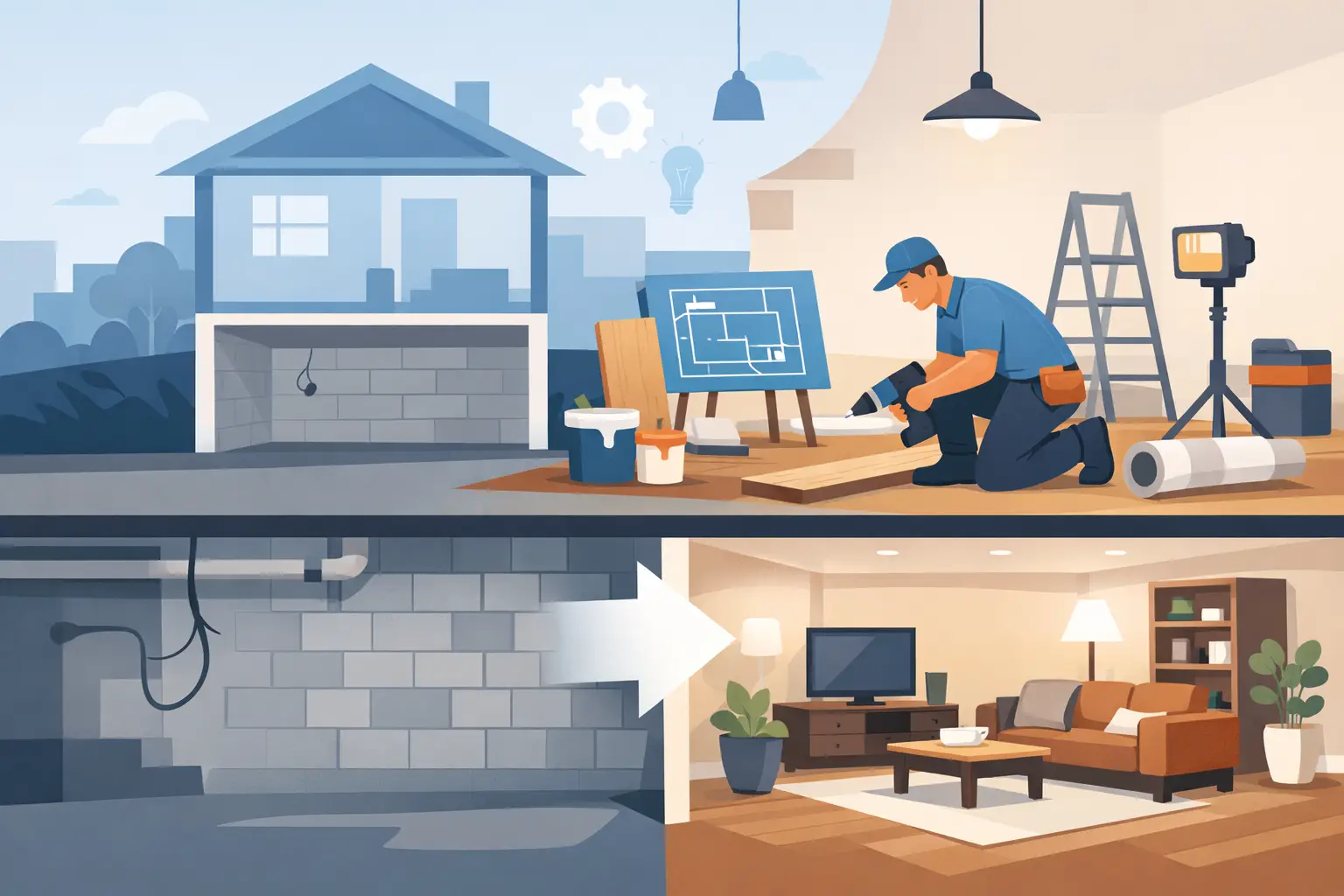
A basement remodel can add square footage without changing your home’s footprint, but it also exposes every shortcut a house has been hiding. Moisture, low ceilings, old wiring, and awkward layouts can turn a promising project into an expensive patchwork if the work is not planned correctly. If you are wondering how to remodel a basement, the right answer starts before drywall, flooring, or paint. It starts with making sure the space can perform as well as it looks.
Start with the basement you actually have
The biggest mistake homeowners make is designing the dream basement before understanding the condition of the existing one. A basement is different from a main-level renovation because below-grade spaces deal with moisture, ventilation, insulation, and access in a different way. What looks like a cosmetic project on the surface may involve foundation crack repair, waterproofing, sump pump updates, or code-related improvements.
Before choosing finishes, take a clear look at the room’s structure and systems. Check for signs of water intrusion, musty odors, uneven floors, staining on walls, or previous repair work. Pay attention to ceiling height, support posts, HVAC runs, plumbing lines, and electrical panel access. Those existing conditions will shape what is realistic, what is worth doing, and what needs professional attention first.
This is also where experience matters. A dependable contractor will not rush to quote a theater room or guest suite without first evaluating whether the basement is dry, safe, and suitable for finishing.
How to remodel a basement with a clear plan
A successful basement remodel is usually built around one question: what should this space do for your family? That answer affects layout, budget, materials, lighting, and permit requirements.
Some homeowners want a family room where kids can spread out without taking over the main floor. Others need a home office, workout area, guest bedroom, full bath, or a combination of spaces. In many homes, the best basement design is not one large open room. It is a balanced layout with zones that support real daily use.
When planning the layout, think about traffic flow and fixed elements first. Stairs, mechanical rooms, and structural supports are not optional, so the design should work with them rather than fight them. A support column, for example, may become part of a built-in wall, bar area, or media feature. A lower ceiling area may be better suited to storage or a hallway than a primary living space.
A good plan also accounts for future flexibility. A playroom today may become a teen hangout, home office, or guest area later. Choosing a layout that can evolve often brings better long-term value than building around one narrow use.
Address moisture before you finish anything
If there is one rule that matters most in basement remodeling, it is this: never finish over a moisture problem. Paint, flooring, and insulation will not solve water intrusion. They will only hide it until the damage gets worse.
That does not mean every basement needs major waterproofing work, but it does mean every basement should be evaluated honestly. Sometimes the issue is simple, such as exterior grading, clogged gutters, or minor air humidity. In other cases, the right solution may include crack sealing, drainage improvements, a sump pump, or dehumidification.
Material selection matters here too. Basement-friendly materials tend to perform better over time than products chosen only for appearance. Depending on conditions, that may mean moisture-resistant drywall in select areas, insulated wall systems, vinyl plank flooring instead of solid hardwood, and trim products that hold up better in a below-grade environment. The best-looking basement is the one that still looks good years later.
Build around code, safety, and comfort
Basement projects often involve more code considerations than homeowners expect. If you are adding a bedroom, bathroom, or major living area, requirements may apply for egress windows, smoke and carbon monoxide detectors, ceiling height, insulation, electrical capacity, and plumbing work. Permits and inspections are not red tape for the sake of it. They help protect the safety, function, and resale value of the finished space.
This is one reason many homeowners prefer a full-service remodeling contractor rather than trying to coordinate trades on their own. Basement work is connected work. Framing affects electrical runs. Plumbing affects layout. Insulation affects comfort. Permitting affects schedule. When one piece is handled poorly, the rest of the project tends to follow.
Comfort is just as important as compliance. Basements can feel cold or dim if they are finished like an afterthought. Proper insulation, air circulation, layered lighting, and thoughtful ceiling design make a major difference. Recessed lighting, wall sconces, under-stair lighting, and lighter paint colors can help a basement feel more open without trying to force it to feel like the main floor.
Set a budget that matches the scope
Homeowners often ask for a cost before they have defined the project, but basement remodeling costs can vary widely based on what is being built. A simple finish for open living space is very different from a basement with a bathroom, wet bar, custom storage, upgraded electrical, and soundproofing.
The smartest budget is not just a number. It is a scope-driven plan. That means deciding what is essential, what is optional, and where quality matters most. Framing, waterproofing, insulation, electrical, and plumbing are not the places to cut corners. Decorative upgrades can often be adjusted more easily than structural or system-related work.
It is also wise to carry room in the budget for conditions revealed during demolition or inspection. In an unfinished basement, hidden issues can show up once work begins. A transparent contractor will talk through that possibility early, not after surprises appear.
Choose finishes that fit basement life
A finished basement should look polished, but it also needs to handle the way people actually use the space. This is often where practical design creates the best results.
Flooring should be durable and moisture-aware. Walls should be easy to maintain. Built-ins and storage can reduce clutter and make the space feel intentional rather than leftover. If the basement will be used heavily by children, guests, or pets, durability may matter more than chasing a trend.
For homeowners adding a bathroom or kitchenette, material coordination becomes even more important. Those spaces should feel connected to the rest of the basement, not dropped in as separate projects. Consistent flooring transitions, cabinet style, hardware finish, and lighting temperature help the lower level feel fully integrated with the home.
Sound control is another detail worth considering, especially for media rooms, offices, and multi-use family basements. Depending on the layout, insulation in interior walls, upgraded ceiling assemblies, or solid-core doors can improve privacy and reduce noise transfer to the floor above.
Work with a contractor who can manage the whole process
If you want to know how to remodel a basement without unnecessary stress, the answer is simple: work with a licensed, insured contractor who treats the project like a full renovation, not a finish-out rush. Basement work touches structure, design, code, moisture management, electrical, plumbing, and final finishes. It needs coordination from the start.
A strong remodeling partner should help you define the scope, explain trade-offs, identify code-related needs, develop a realistic design, and manage scheduling with clear communication. That process matters as much as the end result. Homeowners do not just want a nicer basement. They want confidence that the project is being handled correctly.
For Maryland-area homeowners, that level of planning and craftsmanship is what separates a basement that simply looks updated from one that adds daily comfort, long-term value, and peace of mind. At Deck Wonders, that means personalized design, dependable project management, and workmanship that holds up well beyond the final walkthrough.
The best basement remodels solve problems and create possibilities
A great basement remodel is not about copying a photo or filling empty square footage. It is about turning an underused level of your home into space that works harder for the way you live now. Sometimes that means adding room to gather. Sometimes it means creating privacy, storage, or flexibility your main floor cannot offer.
The right project starts with honest evaluation, thoughtful planning, and quality construction from the ground up. When those pieces are in place, a basement stops feeling like extra space and starts feeling like part of your home.