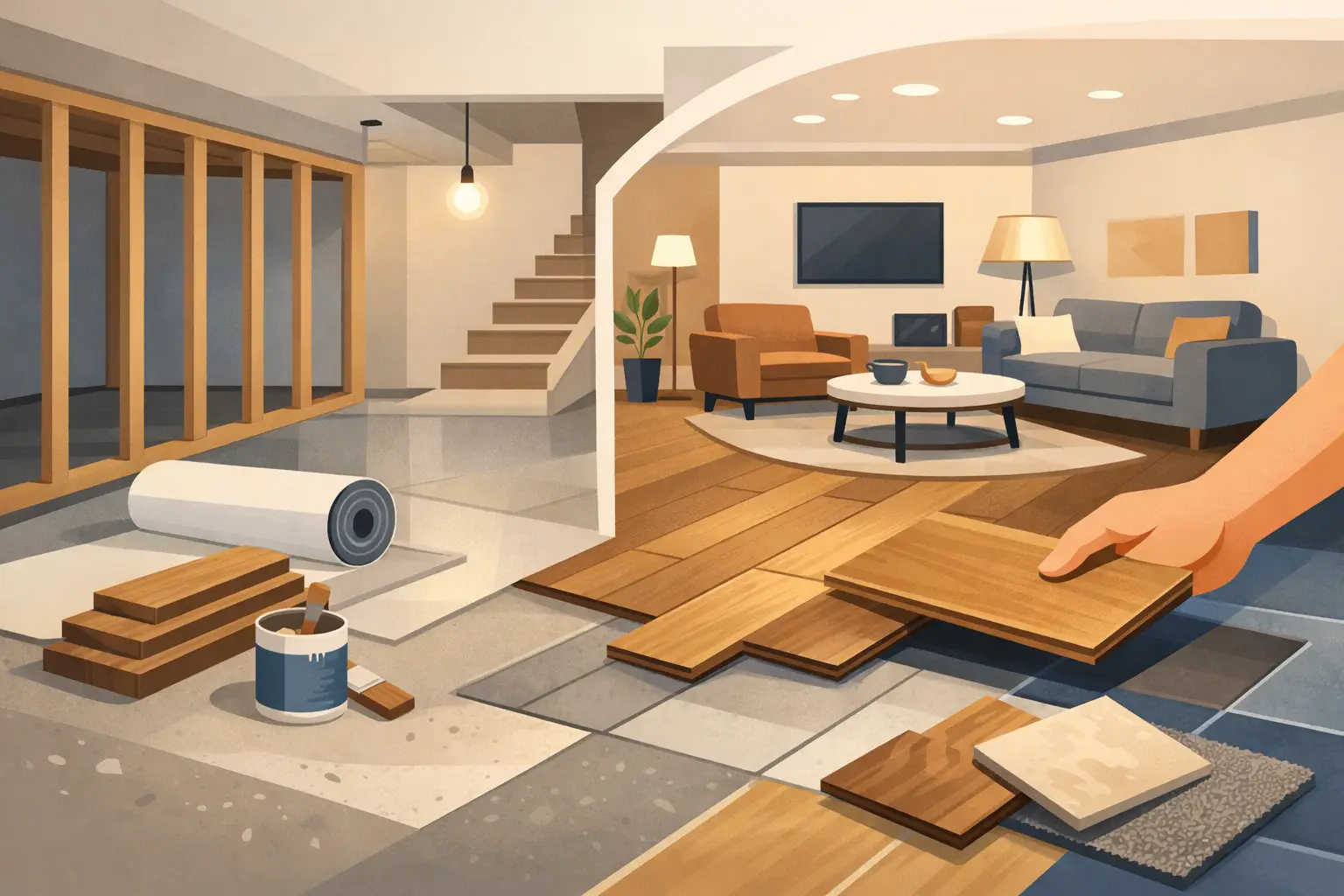
A basement floor can make or break the entire remodel. Homeowners often focus on walls, lighting, and layout first, then realize too late that the floor has to handle cold temperatures, changing humidity, and the occasional moisture issue that does not show up anywhere else in the house. If you are choosing the best basement flooring for remodel plans, the right answer usually comes down to how your basement will be used, how dry it stays year-round, and how much maintenance you want later.
A finished basement asks more from flooring than most rooms do. It needs to feel comfortable underfoot, hold up to traffic, and work with the realities of a below-grade space. That is why there is no single product that fits every remodel. A basement playroom, guest suite, home gym, and entertainment area all place different demands on the floor.
What matters most when choosing the best basement flooring for remodel work
Before looking at colors or patterns, it helps to look at the conditions of the space itself. Basements in Maryland and across the Mid-Atlantic can deal with seasonal humidity swings, cooler slab temperatures, and occasional water concerns from storms or foundation issues. Even a basement that seems dry most of the year may still have enough moisture vapor in the concrete slab to affect certain materials.
That is why moisture resistance usually comes first. After that, most homeowners weigh comfort, durability, appearance, and budget. If the basement is being finished as true living space, sound control and warmth matter more. If it is a utility-heavy space with storage, laundry, or workout equipment, durability may take priority over softness.
The subfloor setup also matters. Some floors can go directly over concrete with the right underlayment, while others need a more protective system underneath. A professional basement remodel should account for both the finished look and the conditions hidden below it.
Luxury vinyl plank is often the best basement flooring for remodel plans
For many homeowners, luxury vinyl plank, often called LVP, is the strongest overall choice. It gives you the look of hardwood without hardwood’s biggest weakness in a basement – moisture sensitivity. Quality LVP handles humidity well, resists wear, and comes in a wide range of wood tones and modern finishes.
It also works well in basements that serve multiple purposes. If you want a family room that still connects visually with the rest of the house, LVP can make the basement feel less like a lower level and more like finished living space. It is especially useful when homeowners want something attractive, durable, and practical without stepping into high-maintenance materials.
That said, not all vinyl products perform the same way. Thickness, wear layer, locking system, and underlayment all affect how the floor feels and lasts. Cheaper material can sound hollow or show more movement over uneven concrete. Good installation matters just as much as product selection.
Tile works well when moisture is the biggest concern
Porcelain or ceramic tile is one of the safest options for basements where water resistance is the top priority. If you have a basement entry from the backyard, a laundry zone, or a space that has had past moisture concerns, tile offers peace of mind. It is hard to beat for durability and easy cleaning.
The trade-off is comfort. Tile can feel cold and hard, especially over a concrete slab. In a basement lounge or kids’ area, that may make the space less inviting unless you add area rugs or radiant heat. For some homeowners, that trade-off is worth it. For others, it makes tile a better fit for specific sections of the basement rather than the entire floor.
Design-wise, tile has come a long way. Large-format styles and wood-look tile can create a clean, upscale finish. Still, grout lines and installation labor can push the cost higher than expected.
Engineered wood can work, but only in the right basement
Some homeowners want real wood in every finished space, and engineered wood is sometimes considered because it is more stable than solid hardwood. It can work in a basement that is consistently dry, climate-controlled, and professionally evaluated for moisture.
Even then, engineered wood is not usually the first recommendation for below-grade remodels. It carries more risk than vinyl or tile if the basement ever experiences elevated humidity or water intrusion. If your goal is long-term reliability with fewer concerns, there are safer choices that deliver a similar look.
This is one of those areas where the best design choice is not always the best remodeling choice. A floor can look beautiful on day one and still be the wrong fit for the conditions of the space.
Laminate has improved, but moisture is still the deciding factor
Laminate flooring has become more durable and more attractive over the years. It can offer a wood-look finish at a lower price point, and some newer products have improved water resistance. For budget-conscious remodels, it may be tempting.
The question is whether it makes sense for a basement specifically. In some dry, well-managed basements, laminate can perform acceptably. But if there is any uncertainty around moisture, it is usually not the safest bet. Once water gets into the core, damage can happen quickly.
That does not mean laminate never belongs in a basement. It means the space needs to earn it. A contractor should evaluate slab conditions, humidity, and the overall basement environment before treating laminate as a dependable long-term solution.
Carpet is comfortable, but it depends on the basement’s history
Carpet still has a place in basement remodels, especially in media rooms, bedrooms, and family spaces where warmth and softness matter. It reduces noise, feels comfortable, and can make a lower level feel finished in a way hard-surface flooring sometimes does not.
But carpet is also the most vulnerable option if moisture enters the space. Even small, recurring dampness can lead to odors, staining, or worse. If a basement has a history of leaks, humidity issues, or water intrusion, carpet is usually not the right call.
A better compromise is often carpet tile or using carpet selectively in the driest parts of the basement while keeping other areas in more water-tolerant materials. That gives homeowners comfort where they want it without overcommitting the entire remodel to a riskier floor choice.
Don’t overlook sealed concrete for modern basement remodels
In some remodels, especially those aiming for a clean, modern, or industrial look, sealed or stained concrete can be a smart option. Since the slab is already there, the material cost can be lower than installing a new floor over the entire space. It is durable, easy to maintain, and not bothered by the same moisture concerns as wood-based materials.
The downside is the same one you would expect – it is hard and can feel cold. For a home gym, hobby area, or utility-forward basement, that may be completely fine. For a guest retreat or family room, most homeowners want something with more warmth and softness.
Still, sealed concrete can be a strong design move when paired with the right lighting, furniture, and area rugs. It is not the default answer, but it deserves more consideration than it usually gets.
How basement use should guide your flooring decision
The best flooring choice becomes clearer when you define the room’s job. A basement built for entertaining usually benefits from LVP because it balances looks, durability, and moisture resistance. A laundry area or mudroom-style basement entrance may be better served by tile. A home theater may justify carpet in a properly dry space. A workout room might do best with a durable base floor and specialized mats where needed.
This is where remodel planning matters. Flooring should not be chosen in isolation. It needs to support the way the basement will actually be lived in, not just how it looks in a sample board.
A well-managed remodeling process also considers transitions between rooms, ceiling height, insulation needs, and how the floor system affects doors, trim, and stairs. Those details shape the finished result more than many homeowners expect.
The floor is only as good as the prep underneath it
One of the biggest mistakes in basement remodeling is treating flooring like a finish-only decision. If the concrete is uneven, if the moisture levels are not properly tested, or if the wrong underlayment is used, even a high-quality material can fail early.
That is why experienced workmanship matters. Proper prep may include leveling, crack repair, moisture mitigation, or installing an appropriate subfloor system depending on the product and basement conditions. Those steps are not the exciting part of the remodel, but they are what protect the investment.
For homeowners who want a finished basement that looks good and stays dependable, product choice and installation quality have to go together. A family-owned contractor with real remodeling experience can help you weigh the trade-offs, avoid short-term fixes, and choose a floor that fits both the design and the structure of the space.
If you are planning a basement remodel, think beyond what looks best in the showroom. The right floor should give you comfort, confidence, and a space that feels finished for years, not just for the first few months.