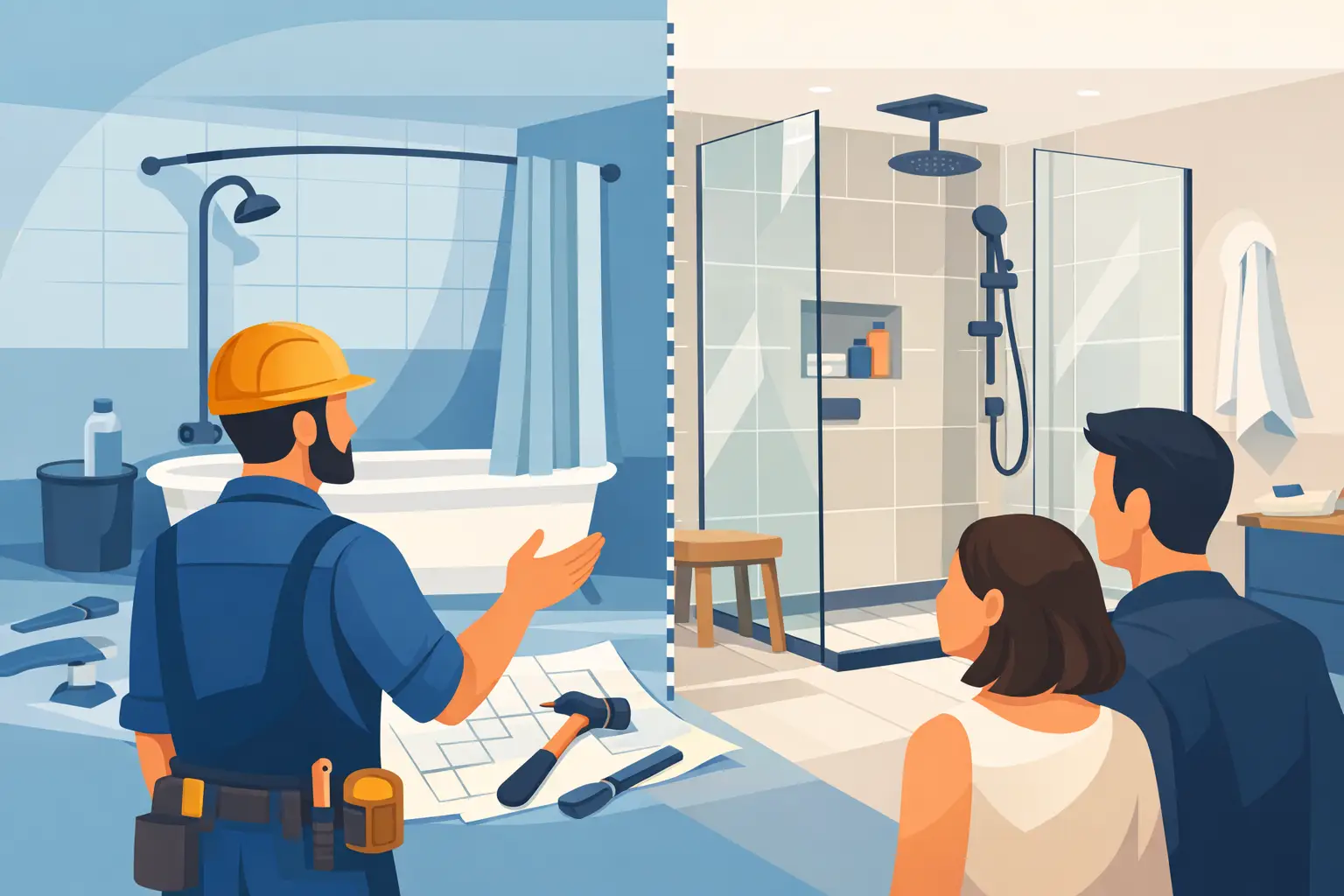
If stepping over a tub wall has started to feel like more trouble than it should, a walk in shower conversion can solve more than one problem at once. It can make your bathroom safer, easier to clean, and better suited to the way you actually live. For many homeowners, it is not just a style upgrade – it is a practical remodeling decision that improves daily comfort and long-term usability.
Why homeowners choose a walk in shower conversion
Most bathroom remodels start with frustration. The tub feels dated, the space looks cramped, or cleaning around old tile and shower doors has become a chore. In other homes, the reason is more urgent. A family member wants easier access, or the current setup no longer feels safe.
A walk in shower conversion addresses those concerns in a way that looks modern and works hard every day. Removing a bulky tub can open the room visually and create a cleaner layout. It can also reduce tripping hazards and make entry much easier, especially when paired with a low-threshold or curbless design.
That said, the right solution depends on the home. In a primary bathroom, replacing a tub with a walk-in shower is often an easy decision. In a hall bathroom that serves children or guests, keeping at least one bathtub somewhere in the house may still make sense for resale and function. Good remodeling is not about forcing one trend into every space. It is about choosing what fits your household now while still protecting the home’s value.
Is a tub-to-shower conversion right for your bathroom?
Before moving forward, it helps to look at the bathroom as a whole, not just the tub itself. The existing footprint, plumbing locations, ventilation, and flooring all affect what is possible. In many cases, the conversion can be done within the current tub area, which helps control cost and keeps the project more efficient. In other bathrooms, a better result comes from reworking the layout slightly to improve movement and sightlines.
This is also where priorities matter. Some homeowners want a fresh, updated look with straightforward finishes. Others are planning for aging in place and need added support, easier entry, slip-resistant surfaces, and room for a bench. Neither goal is better than the other, but each leads to different design choices.
A dependable contractor should walk you through those options clearly, explain trade-offs, and help you avoid spending money in the wrong places.
What happens during a walk in shower conversion
Every home is different, but most projects follow a similar path. The old tub and surrounding materials are removed first. Once the walls are open, the contractor checks the plumbing, framing, and subfloor for any hidden issues such as moisture damage, outdated lines, or structural repairs. This step matters because the finished shower is only as strong as what is behind it.
Next comes the shower base or pan, plumbing adjustments, waterproofing, and wall installation. This part of the project deserves careful attention. A bathroom can look beautiful on the surface and still fail if the waterproofing is done poorly. Experienced craftsmanship matters here more than flashy materials.
After that, the visible details come together – tile or wall panels, fixtures, glass, trim, lighting adjustments, and accessories like shelving or grab bars. The final result should feel intentional, not pieced together. A well-managed remodeling team also helps coordinate inspections and permitting when required, which removes a lot of stress for the homeowner.
Design choices that make the biggest difference
The best walk-in showers are not always the most expensive ones. They are the ones designed around how the space is used.
A low-threshold entry is one of the most common requests, and for good reason. It makes the shower easier to access and gives the bathroom a cleaner, more open feel. For homeowners planning ahead, this feature can make a big difference over time.
Wall material is another major choice. Tile offers the most customization, but it usually comes with more labor, more grout lines, and more maintenance. Solid surface or large-panel systems can create a sleek appearance and are often easier to keep clean. The right pick depends on budget, design preference, and how much upkeep you want in the years ahead.
Glass is another area where style and function need to balance. Frameless glass looks clean and upscale, but it does show water spots more easily and can cost more. A partially enclosed design may offer better splash control in some layouts. Fixtures, niches, benches, and built-in storage should also be selected with daily use in mind, not just showroom appeal.
Safety, comfort, and long-term value
One reason homeowners move forward with this type of remodel is that it can serve both present needs and future plans. A shower that is easier to enter and use today may help you stay comfortable in the home longer.
Safety features do not have to make the bathroom look clinical. Slip-resistant flooring, handheld showerheads, wider openings, and well-placed grab bars can all be integrated into a polished design. A built-in bench can add comfort whether you need seated bathing support or simply want a more relaxing shower experience.
Comfort also comes from details people often overlook at first. Proper drainage, thoughtful lighting, enough elbow room, and storage that keeps products off the floor all affect how the shower feels day to day. These decisions may seem small on paper, but they have a big impact once the bathroom is in use.
Cost factors homeowners should understand
There is no one-size-fits-all price for a tub-to-shower conversion because the final cost depends on scope. If the new shower fits neatly into the old tub footprint with minimal plumbing changes, the project will usually be more straightforward. If the subfloor is damaged, plumbing needs to be relocated, or custom tile and glass are part of the design, the price naturally goes up.
Material selection plays a big role. Prefabricated systems can be budget-friendly and efficient. Custom tile work, premium fixtures, and frameless glass create a more tailored look but require a larger investment. Permits, code upgrades, and waterproofing details also affect pricing, even though they are not the parts homeowners see most.
The key is transparency. A trustworthy contractor should explain what is included, where costs may change, and which upgrades deliver the most value for your budget. Price matters, but so does doing the job once and doing it right.
How long does the project take?
Many homeowners want to know how disruptive the remodel will be, especially if the bathroom is used every day. The answer depends on the condition of the space and the complexity of the new design. A simple conversion may move relatively quickly, while a project involving repairs, custom finishes, or inspection scheduling can take longer.
The timeline is not just about demolition and installation. Material availability, glass fabrication, permitting, and hidden conditions behind existing walls can all affect the schedule. That is why clear communication matters so much. When expectations are set early, the project feels more manageable.
A professional remodeling company should give you a realistic timeline instead of an overly optimistic one. Homeowners generally handle bathroom disruption well when they know what to expect and feel the project is being managed responsibly.
Choosing the right contractor for a walk in shower conversion
This is one of those projects where experience shows. A walk-in shower needs proper slope, reliable waterproofing, precise installation, and a finished look that feels clean and cohesive. Small mistakes can lead to leaks, drainage issues, or uneven finishes that are expensive to correct later.
When evaluating contractors, look for proven bathroom remodeling experience, licensing, insurance, clear proposals, and a process that includes communication from start to finish. Ask how they handle unexpected conditions, what warranty protection is available, and whether they manage permits and inspections when needed.
Homeowners in Maryland often want more than a basic installer. They want a remodeling partner who can guide design decisions, respect the home, and deliver workmanship that holds up over time. That is where a full-service company such as Deck Wonders can bring real value – not just by building the shower, but by managing the entire process with care and accountability.
The best results come from planning, not guessing
A walk in shower conversion should make your bathroom easier to use, easier to maintain, and more enjoyable every day. The strongest projects are not built around trends alone. They are built around your layout, your goals, and the level of quality you expect in your home.
If you are considering the change, start with a clear conversation about how the space needs to function. The right design and the right contractor can turn one outdated tub into a bathroom feature that feels like it should have been there all along.