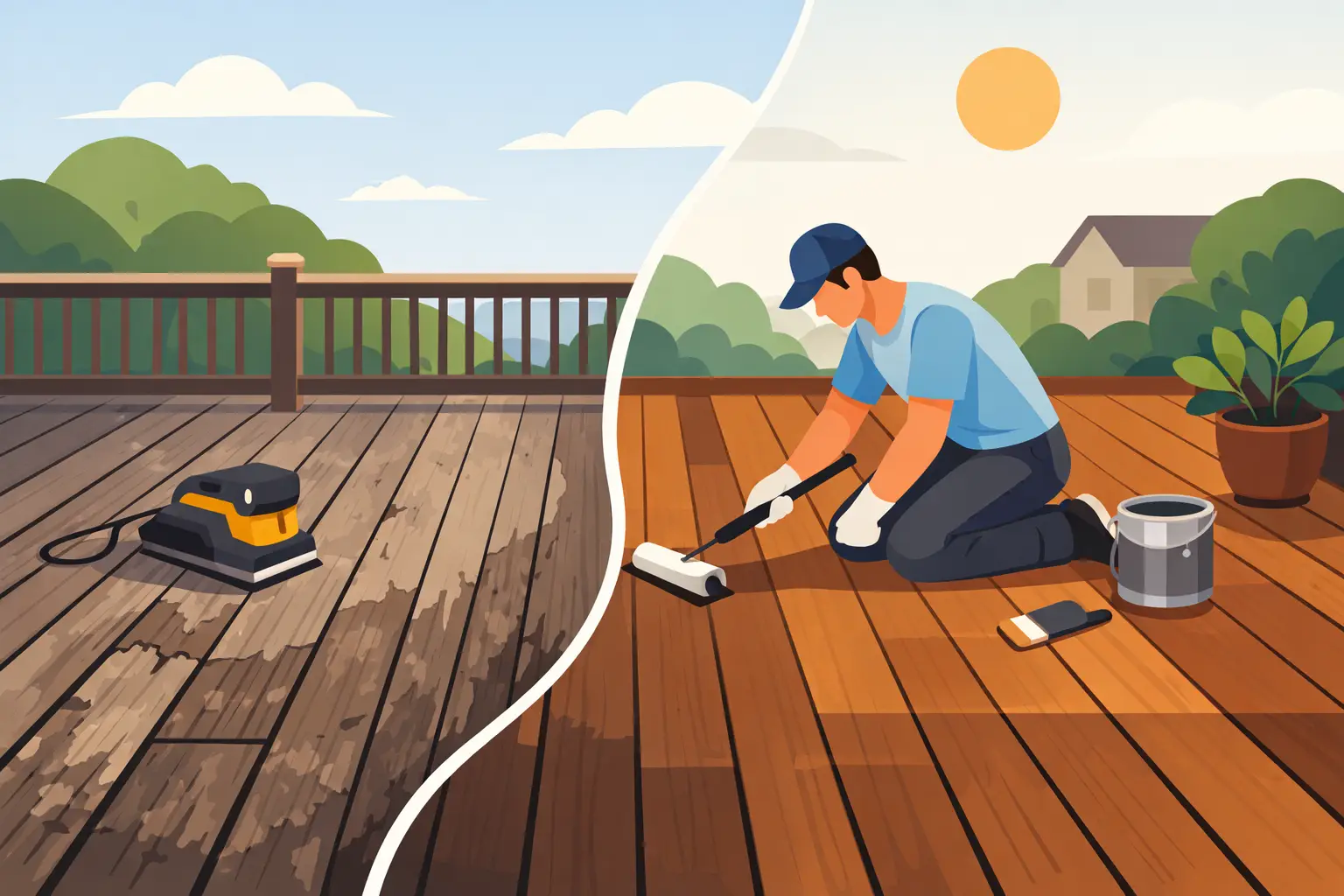
A deck can look tired long before it is truly finished. Faded boards, splinters, surface cracks, and worn stain often make homeowners assume the only answer is tearing everything out and starting over. In many cases, that is not necessary. What is deck resurfacing? It is the process of renewing the visible, worn parts of an existing deck while keeping the structural frame that is still safe and sound.
For homeowners who want a cleaner look, better comfort underfoot, and a more updated outdoor space without paying for a full replacement, resurfacing can be a smart middle-ground solution. The key is knowing when it is the right choice and when a full rebuild makes more sense.
What is deck resurfacing and how does it work?
Deck resurfacing means replacing the decking materials you see and use every day, such as deck boards, railings, stairs, or trim, while preserving the substructure if it is in good condition. In plain terms, the frame stays, and the worn exterior gets upgraded.
That makes resurfacing different from simple deck repair. A repair addresses isolated damage, like one broken board or a loose handrail. Resurfacing is more comprehensive. It gives the deck a refreshed appearance and can significantly improve safety and function, but it is not the same as building a brand-new deck from the ground up.
A professional resurfacing project usually starts with a close inspection of the framing, posts, footings, ledger attachment, and hardware. If those structural elements are still performing as they should, the contractor can remove the old surface materials and install new ones. Many homeowners use this opportunity to switch from aging wood boards to low-maintenance composite decking, upgrade rail systems, or improve the look of the stairs and skirting.
When deck resurfacing makes sense
Resurfacing is most useful when the deck’s structure is still solid but the surface has clearly aged out. That often happens with older pressure-treated wood decks that have seen years of sun, moisture, foot traffic, and seasonal temperature swings.
If the frame is stable and code-compliant, resurfacing can extend the deck’s useful life while giving it a noticeable visual upgrade. Homeowners often choose this route when they want a better-looking outdoor space for entertaining, easier maintenance, or a more modern finish that matches recent home improvements.
It can also be a practical option if you like the current deck layout. If the size, shape, and location already work well for your yard and your family, there may be no reason to pay for a complete redesign.
Signs your deck may be a resurfacing candidate
The only reliable way to know is through a professional evaluation, but there are common signs that point toward resurfacing instead of full replacement. Surface wear is one of the biggest clues. Boards may be splintering, cracked, warped, stained, or heavily weathered, while the underlying frame still feels stable.
Railings are another common issue. A deck can be structurally sound and still feel dated or unsafe because of loose, deteriorated, or outdated guardrails. Stairs can also wear out faster than the main frame and become a good candidate for replacement during a resurfacing project.
Sometimes the problem is less about damage and more about performance. Homeowners get tired of annual sanding, staining, and board replacement. In that case, resurfacing can be as much a lifestyle upgrade as a cosmetic one.
When resurfacing is not enough
This is where experience matters. Not every old deck should be resurfaced.
If the framing has rot, insect damage, widespread moisture issues, failing footings, poor ledger attachment, or structural movement, resurfacing is the wrong fix. Covering structural problems with new boards does not solve anything. It only delays a bigger and more expensive problem.
Code compliance also matters. Older decks may have been built under different standards, and a resurfacing project can reveal issues with joist spacing, railing height, stair geometry, or connection details. In some cases, enough structural corrections are needed that a replacement becomes the better investment.
This is why homeowners should be cautious about treating resurfacing as a cosmetic shortcut. A dependable contractor will tell you when the frame is worth saving and when it is not.
What gets replaced during a deck resurfacing project?
Every project is a little different, but resurfacing often includes the deck boards, stair treads, railings, balusters, post sleeves, fascia, and trim details. Depending on the deck’s condition and the homeowner’s goals, lighting, skirting, and access points can also be updated at the same time.
This is often the best moment to improve the overall look of the space. Many homeowners move from plain wood railings to composite or aluminum systems for a cleaner finish and lower maintenance. Others update the color palette to better match the home’s exterior, patio, or fence.
Because the frame remains in place, resurfacing can be more efficient than a full replacement, but it still requires careful craftsmanship. Surface materials only perform well when they are installed over a frame that is level, properly spaced, and structurally sound.
Benefits of deck resurfacing
The biggest benefit is value. Resurfacing can deliver the visual impact of a major upgrade without the full cost of tearing out and rebuilding the entire deck. For many homeowners, that creates a better balance between budget and results.
It also reduces disruption. A resurfacing project is often faster than a full rebuild, which matters when you want your outdoor living space back as soon as possible. If permits or inspections are needed based on the scope of work, working with an experienced contractor helps the process stay organized and less stressful.
Maintenance is another major advantage. If you resurface with composite boards and upgraded railing systems, you can spend a lot less time on sanding, sealing, and staining. That is especially appealing for busy homeowners who want the deck to look good without turning it into a yearly project.
There is also the design benefit. Resurfacing gives you a chance to refresh the appearance of your home from the backyard out. A worn deck can make the whole exterior feel older. A professionally resurfaced deck can make the space feel cleaner, more inviting, and more in line with how you actually want to use it.
The trade-offs homeowners should understand
Resurfacing is not automatically the cheapest long-term option. If the frame is near the end of its life, putting premium surface materials on top of it may not be the smartest investment. It depends on the age of the deck, the condition of the substructure, and how long you plan to stay in the home.
Material choice matters too. Composite decking offers lower maintenance and a polished appearance, but it usually costs more up front than wood. Wood can be more budget-friendly at installation, but it comes with more upkeep over time. There is no single right answer. The best choice depends on how you prioritize cost, appearance, and maintenance.
Homeowners should also understand that resurfacing does not usually fix layout problems. If your current deck is too small, poorly positioned, or awkward to access, keeping the same frame may limit what can be improved.
Why a professional inspection matters
A deck is not just a platform with boards on top. It is a structural system attached to your home and exposed to the elements year after year. That is why resurfacing should start with a serious evaluation, not a guess.
An experienced contractor will look past the visible wear and examine the components you cannot judge at a glance. They can tell whether the frame is worth preserving, whether any structural corrections are needed, and whether resurfacing is truly the right path.
That protects your investment. It also protects your family and guests. Good workmanship is not only about how the finished deck looks. It is about whether the structure beneath it performs safely and reliably over time.
For homeowners in Maryland, working with a licensed, bonded, and insured contractor matters even more when permits, inspections, or code-related updates may come into play. Companies like Deck Wonders approach resurfacing with that full-picture mindset, combining design improvement with experienced construction oversight.
What to expect from the process
The first step is a site visit and inspection. Receive a clear explanation of whether resurfacing is viable, materials are recommended, and what portions of the deck should be replaced. A good quote should not feel vague or rushed.
Once the plan is set, the old surface materials are removed, the frame is reviewed and corrected as needed, and the new decking and finish elements are installed. Communication matters throughout the project. Homeowners want to know what is happening, what the timeline looks like, and whether any hidden issues have been uncovered.
That is one reason turnkey project management is valuable. When the same team handles evaluation, planning, construction, and any required coordination, the process tends to be smoother and more predictable.</p>
A worn deck does not always need a full reset. Sometimes it needs the right inspection, the right materials, and the right craftsmanship to make it feel like part of your home again.</p>