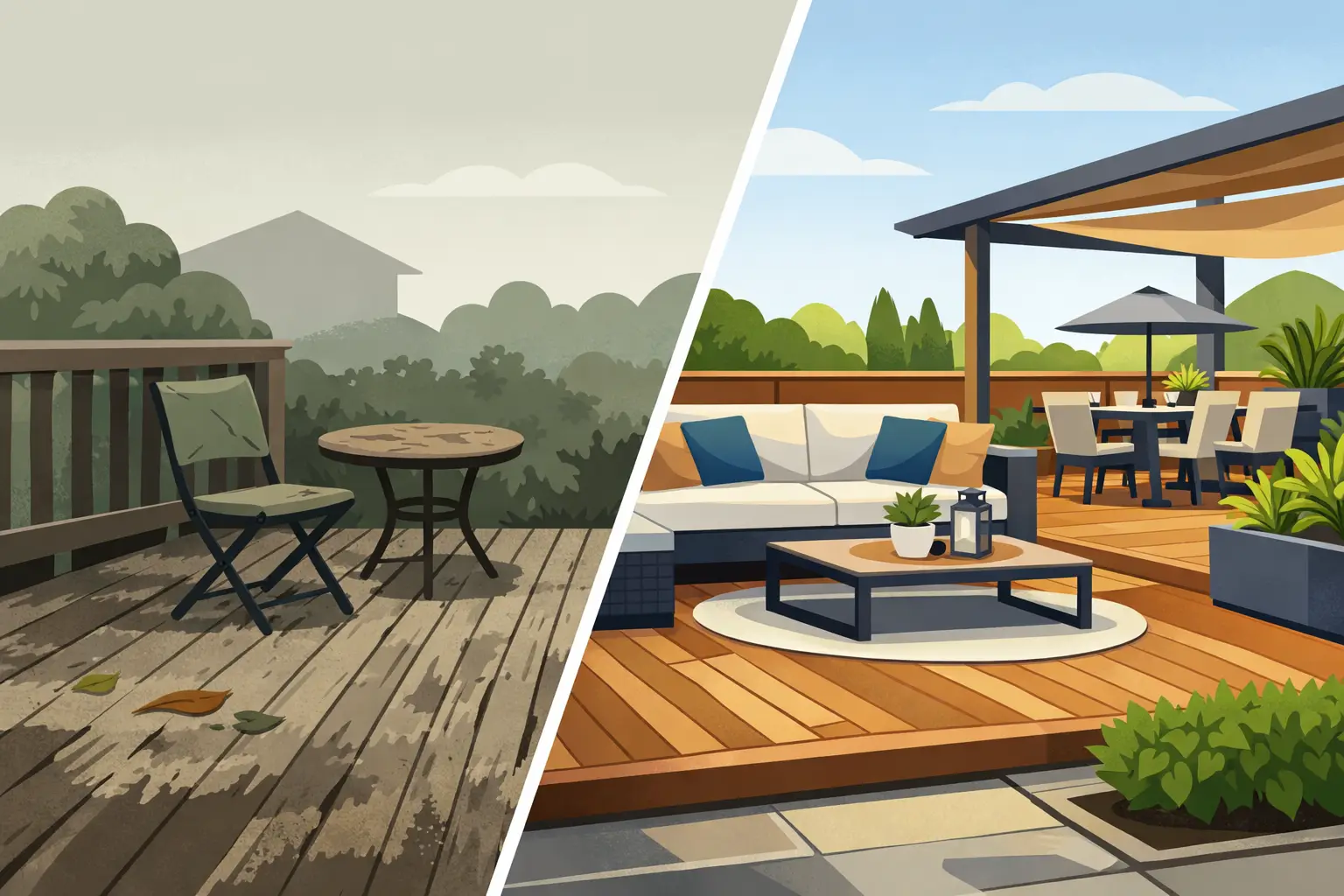
A tired deck changes the way your whole backyard feels. When homeowners look at a before and after deck makeover, they are not just noticing new boards or fresh color. They are seeing what happens when an underused, weathered structure becomes a safer, better-looking space for relaxing, entertaining, and adding value to the home.
For many Maryland-area homeowners, the problem starts small. A little surface wear, a few loose boards, fading stain, railings that feel dated, steps that no longer feel solid. Over time, those issues make the deck less inviting and sometimes less safe. The right makeover does more than cover up the damage. It solves the practical problems and gives the space a fresh purpose.
What a before and after deck makeover really changes
The biggest difference in a before and after deck makeover is usually not the deck itself. It is how the homeowner uses the space once the project is done. A worn deck often becomes a place people avoid. A rebuilt or resurfaced deck becomes the spot for family dinners, weekend gatherings, and quiet evenings outside.
That shift matters because decks are one of the most visible extensions of the home. If the deck looks neglected, the backyard can feel neglected too. When the materials, layout, and finish all work together, the outdoor space feels intentional. It looks cared for, and it feels like part of the house rather than an afterthought.
There is also a financial side to it. While every project is different, an attractive and well-built deck can improve curb appeal and support resale value. Buyers notice outdoor living space, especially when it looks clean, updated, and move-in ready.
The most common signs your deck needs a makeover
Some decks need a full rebuild. Others only need resurfacing, repairs, and design updates. Knowing the difference is where experience matters.
If the frame is still in good condition, resurfacing can often transform the look without the cost of starting from scratch. This approach makes sense when the structure is sound but the visible surfaces have aged poorly. New decking boards, updated railings, refreshed stairs, and a better finish can create a dramatic result.
On the other hand, if there is rot, unstable footings, structural movement, or code issues, cosmetic improvements are not enough. Covering serious problems only delays the real work. A dependable contractor will be direct about what can be repaired, what should be replaced, and what is required for long-term safety.
Homeowners often call for a deck makeover when they notice splintering boards, soft spots, loose railings, peeling paint, uneven steps, rusted fasteners, or a layout that no longer suits the way they live. Sometimes the issue is less about damage and more about age. A deck built years ago may still stand, but it may not reflect current style, comfort, or code expectations.
Before and after deck makeover upgrades that make the biggest impact
The most successful projects combine structural confidence with visible improvement. That means the deck should feel solid first, then beautiful.
New decking material is one of the clearest upgrades. Homeowners often move from worn wood surfaces to pressure-treated lumber, hardwood, or low-maintenance composite, depending on budget, appearance goals, and maintenance preferences. Wood offers a classic look and lower upfront cost, but it needs regular care. Composite reduces upkeep, though the initial investment is usually higher. It depends on how long you plan to stay in the home and how much maintenance you want to take on.
Railing replacement also changes the look quickly. Thick, outdated railings can make a deck feel heavy and closed in. Cleaner lines, updated balusters, or mixed-material designs can open the space visually while improving safety. If the deck overlooks a yard, garden, or tree line, this kind of change can make the whole outdoor area feel larger.
Stairs are another high-impact feature. Old steps can look worn long before the main deck fails. Wider stairs, better lighting, and stronger handrails create a more polished transition from the house to the yard.
Color and finish matter too. Sometimes the before and after effect comes from choosing a stain or surface tone that works better with the home’s exterior. Gray, cedar, walnut, and natural wood tones all create different moods. The best choice depends on siding color, sun exposure, and how much dirt or wear the surface is likely to show.
Design choices that improve function, not just appearance
A deck makeover should support the way the household actually lives. That is where custom planning makes the difference between a nice-looking deck and one that gets used every week.
If you host often, the layout should leave room for furniture, traffic flow, and grilling without feeling crowded. If you want a quieter retreat, privacy elements such as screens, strategic railing design, or nearby fence improvements may matter more than sheer size. Families with children may care most about stair safety, gate options, and durable surfaces. Older homeowners may prioritize smoother transitions, stronger railings, and lower-maintenance materials.
Built-in seating, accent lighting, pergola features, and skirting can all add value when they fit the home and budget. But more features are not always better. A simpler deck with better proportions and high-quality materials often performs better over time than an overloaded design that stretches the budget too thin.
That is why planning should start with priorities. What frustrates you about the current deck? What do you want the updated space to do better? Those answers usually point to the right scope.
Why workmanship matters in every deck transformation
A before and after deck makeover is easy to appreciate in photos. What you cannot see as easily is what separates a lasting result from one that starts showing problems too soon.
Proper framing, fastening, flashing, drainage planning, and code compliance all affect how well the deck performs. So does the quality of the installation itself. Boards should be aligned properly. Railings should feel secure. Stair dimensions should be consistent. Finishes should be applied correctly and at the right time.
This is one reason homeowners benefit from working with a licensed, insured contractor who manages the project from consultation through completion. When permits or inspections are required, they need to be handled correctly. When surprises come up, there should be a clear plan. Good communication is not a bonus on a remodeling project. It is part of what keeps the job on track.
As a family-owned remodeling company, Deck Wonders understands that homeowners are not just paying for materials. They are paying for confidence in the process, clear expectations, and workmanship that holds up.
Budgeting for a before and after deck makeover
Costs vary based on deck size, structural condition, material selection, and added features. A resurfacing project will usually cost less than a full replacement, but only if the underlying structure is worth saving. Spending less upfront on the wrong approach can lead to higher costs later.
There is also a balance between appearance and lifecycle cost. Pressure-treated wood may be budget-friendly at installation, while composite may save time and maintenance expenses over the years. Neither option is automatically better. The right fit depends on your budget, your design goals, and how much ongoing upkeep you are comfortable with.
A detailed estimate should break down what is being repaired, replaced, or upgraded so there is no confusion about scope. Homeowners deserve transparency, especially when the project involves structural concerns or code-related updates.
How to get the best result from your project
The best deck makeovers start with an honest evaluation. Not every old deck needs to be torn out, and not every deck can be saved with cosmetic improvements. A professional assessment helps you avoid both extremes.
Bring photos of what you like, but also be clear about how you want to use the space. A beautiful deck that does not fit your day-to-day life will never feel complete. Think beyond surface finishes and ask the bigger questions about safety, layout, maintenance, and long-term value.
When the work is done right, the after is about more than appearance. It is about stepping outside and feeling like the space finally matches the home you have worked hard to build. If your current deck looks worn, feels unsafe, or simply no longer works for your family, the smartest next step is to get a professional opinion and a clear plan for what is possible.