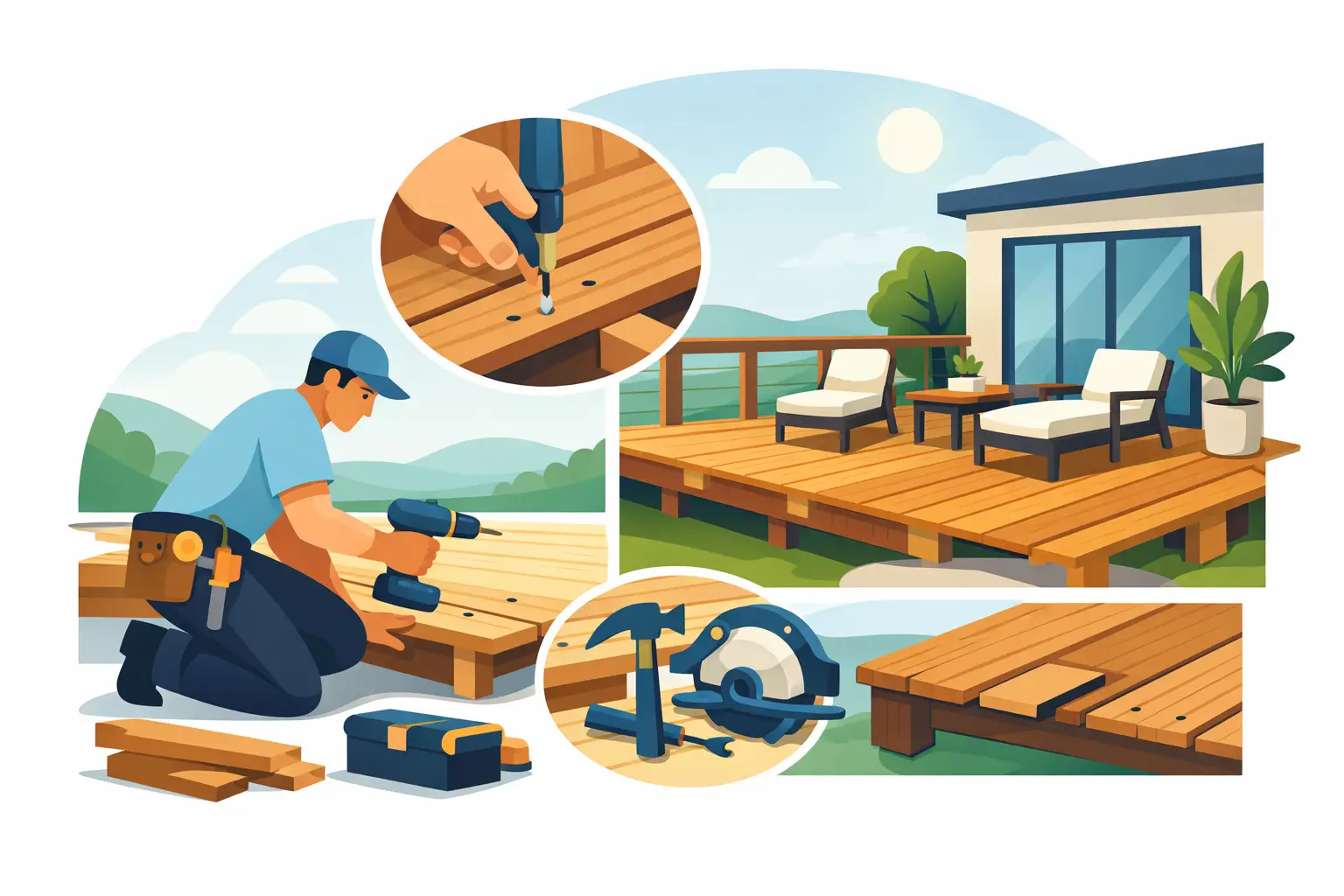
A loose railing usually does not stay a small problem for long. Neither do soft deck boards, wobbly stairs, or flashing that was skipped the first time around. For homeowners investing in deck build and repair, the goal is not just to make the space look better. It is to make sure the structure is safe, durable, and ready for real everyday use.
A deck has to do more than photograph well. It needs to handle weather, foot traffic, furniture weight, grilling, and years of seasonal expansion and moisture exposure. When a deck starts showing age, the right solution is not always a full replacement. Sometimes a targeted repair is the smartest move. Other times, rebuilding part or all of the structure saves money and stress over the long run.
What deck build and repair really involves
Many homeowners think of deck work as surface-level updates, but quality results depend on what is happening underneath. A deck may look worn because the boards have faded, but the framing could still be solid. On the other hand, a fresh coat of stain will not solve movement in the posts, weak connections, or hidden rot where water has been sitting for years.
That is why deck build and repair should start with a full evaluation of the structure, not just the visible finish. The condition of the footings, framing, joists, ledger attachment, stairs, railings, and fasteners all matter. If one critical area has failed, cosmetic improvements alone can leave you with a deck that still has safety issues.
For families who use their outdoor space often, this matters even more. A deck is not separate from the home experience. It is where people gather after work, host summer meals, and create added living space without building an addition. When built or repaired correctly, it becomes one of the most useful areas of the property.
When a repair makes sense
A repair is often the right path when the deck has isolated damage and the main structural components are still in good shape. This can include a section of cracked boards, a damaged stair tread, loose railing components, or areas where fasteners have backed out over time. In these cases, focused repairs can restore safety and appearance without the cost of a full rebuild.
Repairs also make sense when the deck is fundamentally sound but needs updates to improve longevity. Replacing worn decking, reinforcing connections, improving drainage, or correcting flashing can add years of service life. This is especially valuable for homeowners who want to improve the space now while planning larger upgrades later.
Still, there is a difference between repairable wear and signs of widespread failure. If multiple areas are soft, the framing is compromised, or the deck was originally built below current standards, patchwork fixes may only delay a larger problem.
Common signs your deck needs professional attention
Some issues are obvious, like split boards or unstable railings. Others are easier to miss. Posts that appear slightly out of plumb, movement when you walk across the deck, rusting hardware, and moisture damage near the ledger board can point to deeper concerns. Stairs that shift underfoot are another warning sign many homeowners ignore for too long.
Water is usually the biggest long-term threat. Once moisture gets into the wrong places and stays there, wood deterioration can spread faster than expected. A professional inspection helps determine whether the problem is limited to certain components or has reached the structural core of the deck.
When rebuilding is the better investment
There are times when rebuilding costs more upfront but makes far more sense overall. If the frame is failing, the layout no longer works, or the deck was built with outdated materials and poor detailing, a rebuild allows everything to be corrected at once. That includes the structural integrity, the appearance, and the way the deck fits the home.
This is often where homeowners gain the most value. Instead of paying for repeated repairs on an aging deck, they can invest in a structure designed for how they actually live now. Maybe that means wider stairs, better traffic flow, stronger rail systems, lower-maintenance materials, or a more usable layout for entertaining and family time.
A rebuild is also a chance to resolve the small frustrations that come with older deck design. Uneven transitions, wasted corners, limited seating space, and awkward access points can all be improved when the project is approached as a custom solution rather than a simple replacement.
Materials matter, but workmanship matters more
Homeowners often start by asking whether wood or composite is better. That is a fair question, but material choice is only part of the equation. Even premium decking products can underperform if the framing is off, the spacing is inconsistent, or the drainage details were overlooked.
Pressure-treated wood remains a practical choice for many homeowners because it is cost-effective and versatile. Composite decking offers lower maintenance and a clean, updated look, but it comes with a higher upfront cost and still depends on proper installation. The better option depends on budget, usage, design goals, and how much maintenance you want to take on in the years ahead.
What does not change is the need for experienced craftsmanship. Accurate framing, secure connections, proper flashing, code-compliant railings, and attention to finish details all shape how the deck performs. Good deck work should feel solid underfoot, look clean from every angle, and hold up season after season.
Why permits and code compliance should not be an afterthought
Deck projects are one of those home improvements where hidden shortcuts can create real liability. Structural requirements, railing height, stair geometry, ledger attachment, and footing depth are not minor details. They affect safety, inspection outcomes, and future resale questions.
For homeowners, this is where working with a licensed, bonded, and insured contractor makes the process smoother. A professional team that manages permits and inspections when required helps protect both the project and the property owner. It also reduces the risk of expensive corrections later.
In Maryland and similar climates, weather exposure adds another layer of importance. Freeze-thaw cycles, humidity, and heavy seasonal use all put pressure on exterior structures. Building to code is the baseline. Building with long-term performance in mind is what makes the difference.
The value of a custom approach
No two homes use outdoor space in exactly the same way. Some families need a deck built for entertaining with room for dining and grilling. Others want a low-maintenance platform with easy access to the yard. Some are focused on resurfacing an aging deck to improve appearance and safety without changing the footprint.
That is why a one-size-fits-all answer rarely works. The right contractor should ask how you use the space, what problems you are trying to solve, and what kind of investment makes sense for your home. A thoughtful plan should balance structure, style, maintenance expectations, and budget.
At Deck Wonders, that customer-first approach is a major part of what homeowners value. The process is built around clear communication, personalized recommendations, and workmanship that supports both appearance and performance. For many homeowners, that kind of guidance is just as important as the construction itself.
What homeowners should expect from a quality contractor
A dependable contractor should be able to explain what is repairable, what is not, and why. You should not have to guess whether a recommendation is based on safety, longevity, or cost. Transparent communication matters, especially when the project involves structural concerns or multiple options.
You should also expect a clear scope of work, realistic timeline, material guidance, and respect for your property throughout the job. Good project management keeps surprises to a minimum. It also gives homeowners confidence that the finished deck will meet both practical needs and visual expectations.
Warranties, licensing, insurance, and proven experience are not just trust signals for a website. They are part of what protects your investment. When a contractor stands behind the work, it shows in the planning, execution, and follow-through.
A better deck should make home feel easier
The best deck projects do more than replace damaged boards or update the backyard. They remove worry. They give homeowners a space that feels safe, comfortable, and worth using every day. Whether the right answer is a strategic repair or a full rebuild, quality work pays off in function, appearance, and peace of mind.
If your deck has started to show wear, the smartest next step is not to wait for a bigger problem. It is to get a clear assessment and a plan that fits your home, your goals, and the way you want to live in the space.